Portfolio
A selection of the kinds of systems we’ve delivered. We leave out client details on purpose, so ask on WhatsApp for examples close to your project.
This trading software portfolio is a selection of the kinds of systems we have delivered. We anonymise it on purpose. Also, the people who commissioned each system own it outright.
On this page
What this page is, and what it is not
This portfolio shows the kinds of systems we have delivered, with every name left out. People who pay for trading software rarely want their strategy, broker or size on somebody else’s website. So we would rather keep their custom than use their name.
That is why this portfolio carries no client names and no performance figures. We do not publish other people’s results either. After all, any portfolio that does is showing you demo accounts, or the one client that worked.
What you can do instead is ask. Tell us what you are trying to build. Then we will describe the closest thing we have delivered, in useful detail and without naming anyone.
The kinds of work in this trading software portfolio
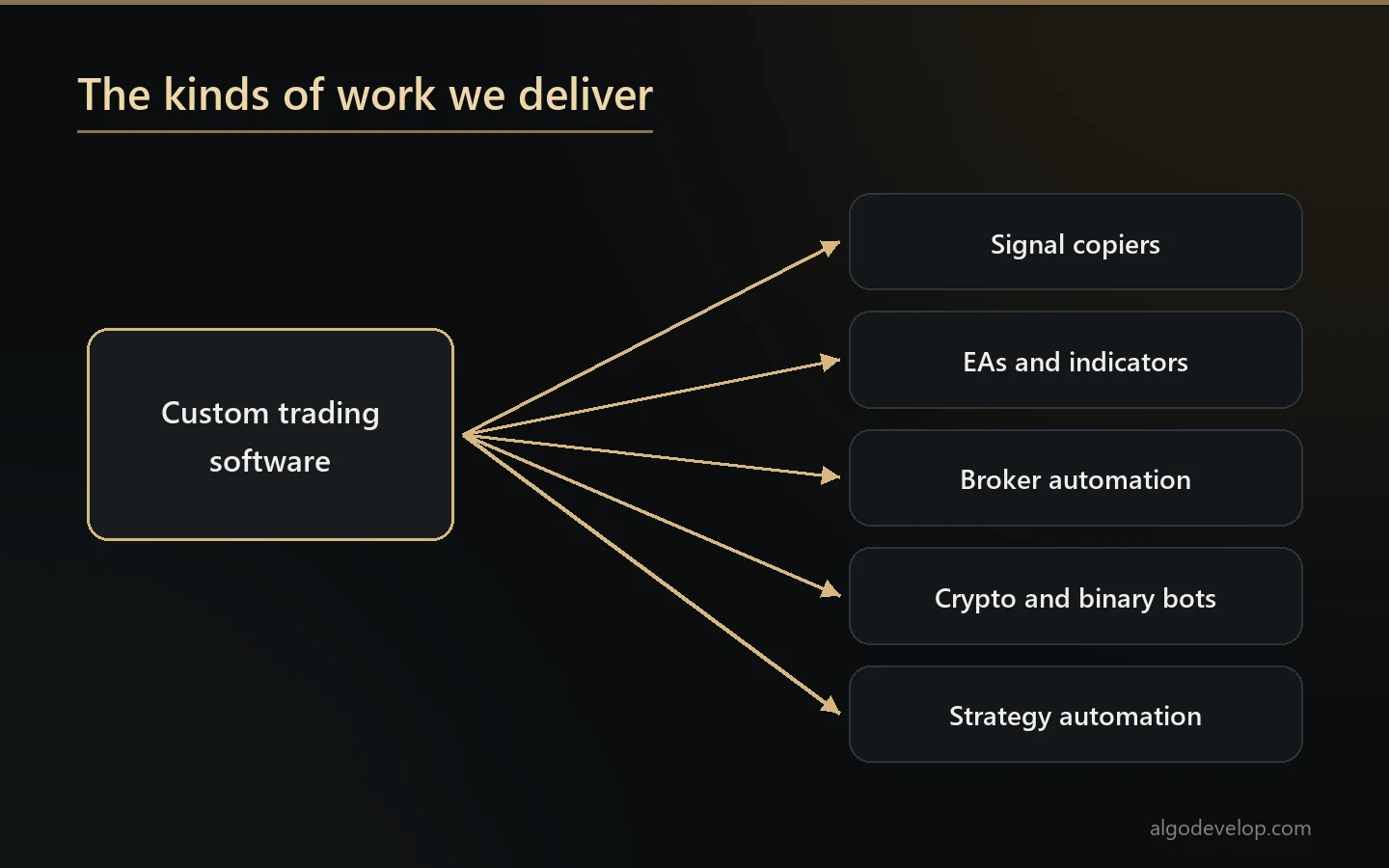
Almost everything in the portfolio falls into one of five groups. Each group also has its own page on how we do that work:
- Signal copiers. A channel posts and an account trades – from Telegram, WhatsApp, Discord or TradingView. See copy trading software.
- Expert Advisors and indicators. Strategies built as MT4 and MT5 EAs, and custom indicators with alerts. MetaTrader 5’s own help describes an EA as a mechanical trading system.
- Broker automation. Order placement through Indian broker APIs, and bridges to anything else that publishes one.
- Crypto and binary bots. Python bots on exchange APIs, as well as binary platform automation.
- Strategy automation. Turning a manual strategy into something that trades by itself.
What every project has in common
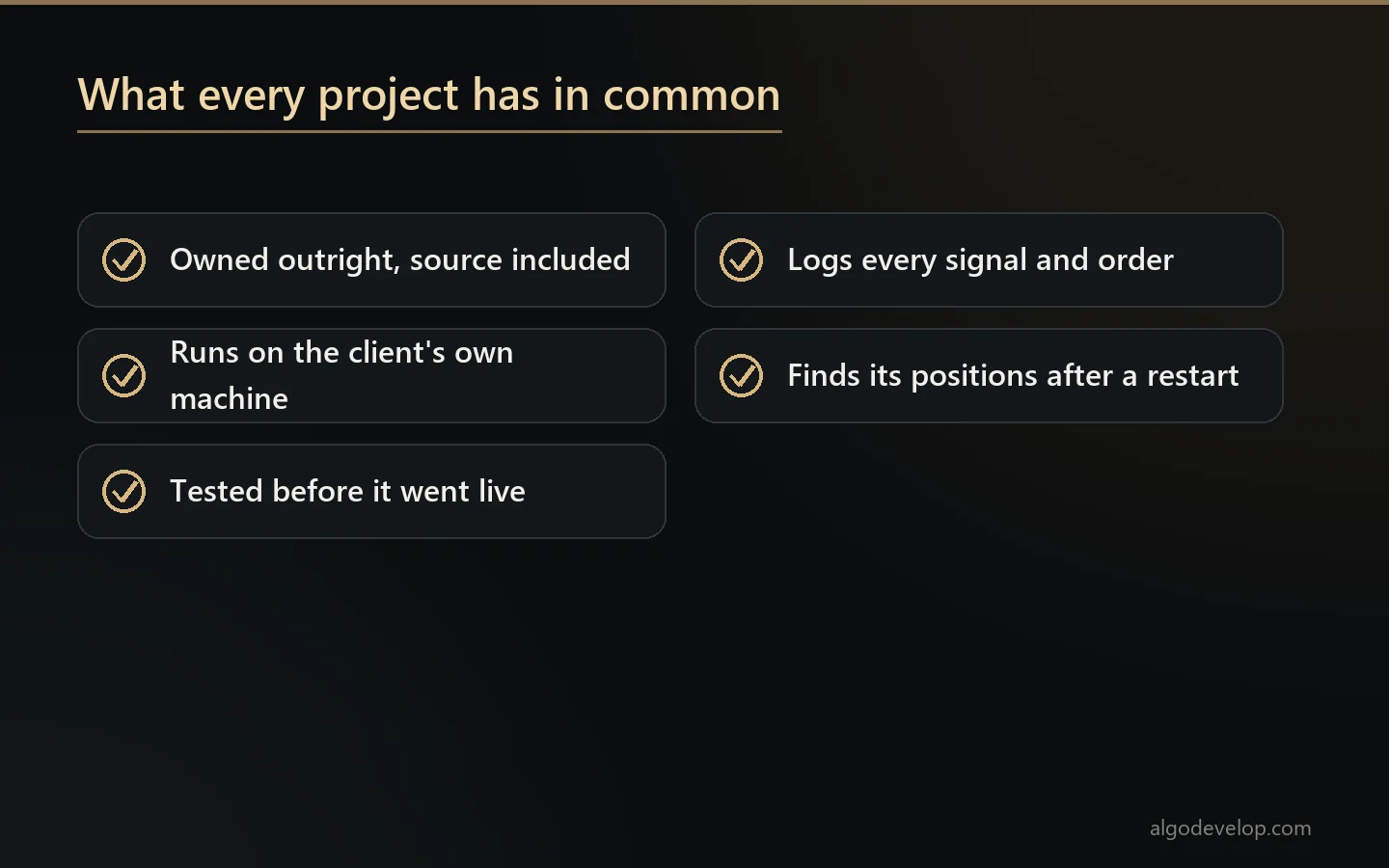
Whatever the group, the same things are true of every project in this portfolio:
- The client owns it outright – source, documentation and all. There is no per-trade cut, no expiry, and nothing of ours it has to reach in order to work.
- It runs on their machine or their VPS, signed in to their own accounts, with credentials we never see.
- We tested it before it went live – on backtest, on demo, or with trading disabled so the log showed what it would have done.
- Every build logs everything. That means every signal seen, every order placed, and every refusal with its reason.
- It survives a restart, finding its real positions again rather than losing track of them.
What happens after a project is delivered
A portfolio is a list of things we finished, and it says nothing about what happened next. So here is what does happen.
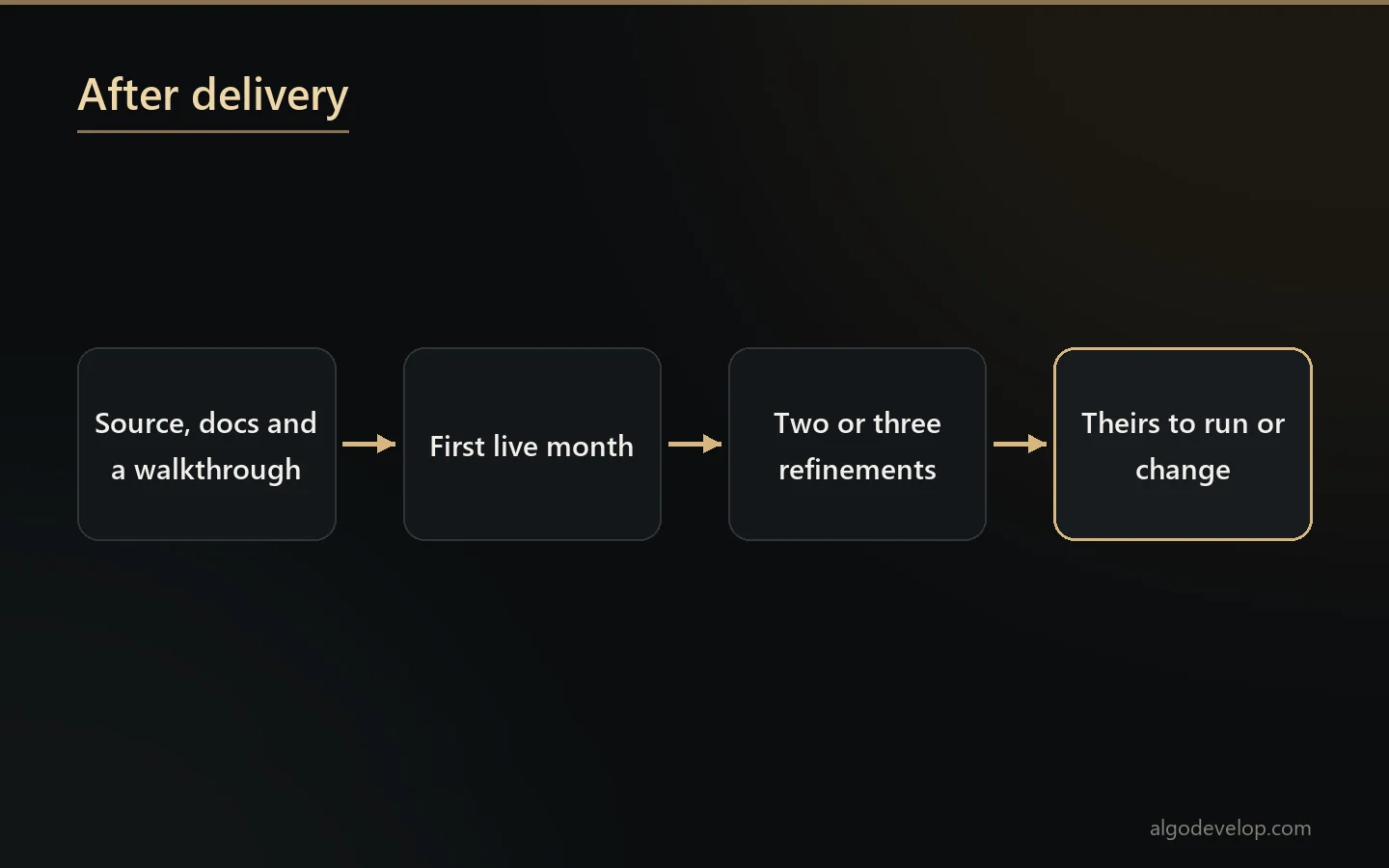
Every project here came with source, documentation and a setup walkthrough, and the client kept all three. The first live month usually turns up two or three refinements. For example, a filter turns out too tight, or a broker behaves in a way nobody predicted. That is normal rather than a failure, and support covers it.
After that, the software is theirs to run, change, or hand to another developer. None of it depends on us still being here, which is the main reason people commission software rather than rent it.
How a project actually runs
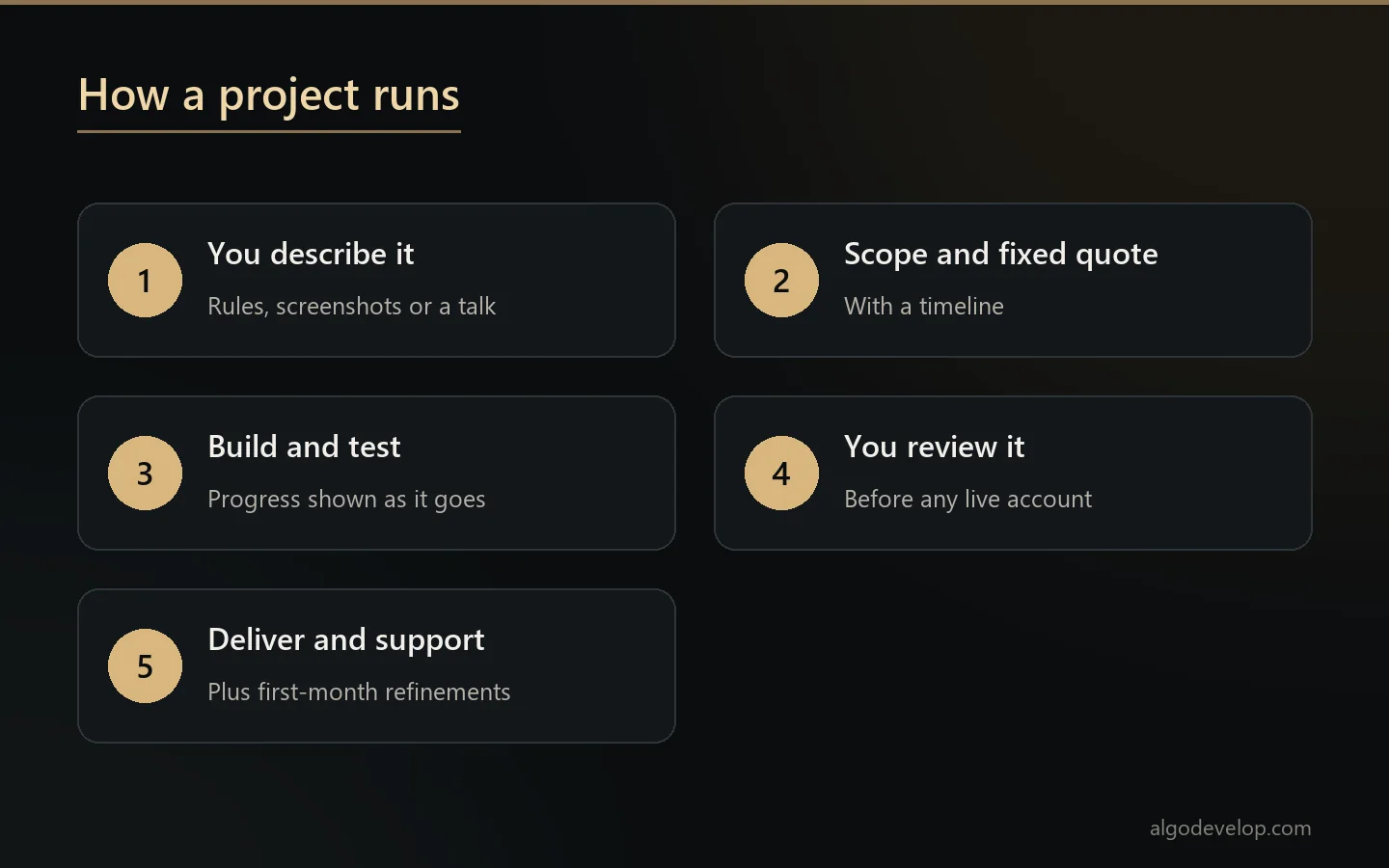
- You describe the requirement. Every project here started on WhatsApp, with rules, screenshots, a PineScript, or a talk about how you trade.
- We scope it and quote a fixed price with a timeline. Before that, we tell you anything we think will not work as described.
- Next, we build and test it, and show you progress along the way.
- You review it before it touches a live account.
- Then we deliver, document and support it, and handle the refinements the first live month usually suggests.
What should you send first? The market, the platform or broker, and your rules or signal source. Screenshots of real trades often help most, because they show what you actually do.
What we tell clients that costs us work
A portfolio is where a vendor is most tempted to say only flattering things. So here are the conversations we have that lose us projects.
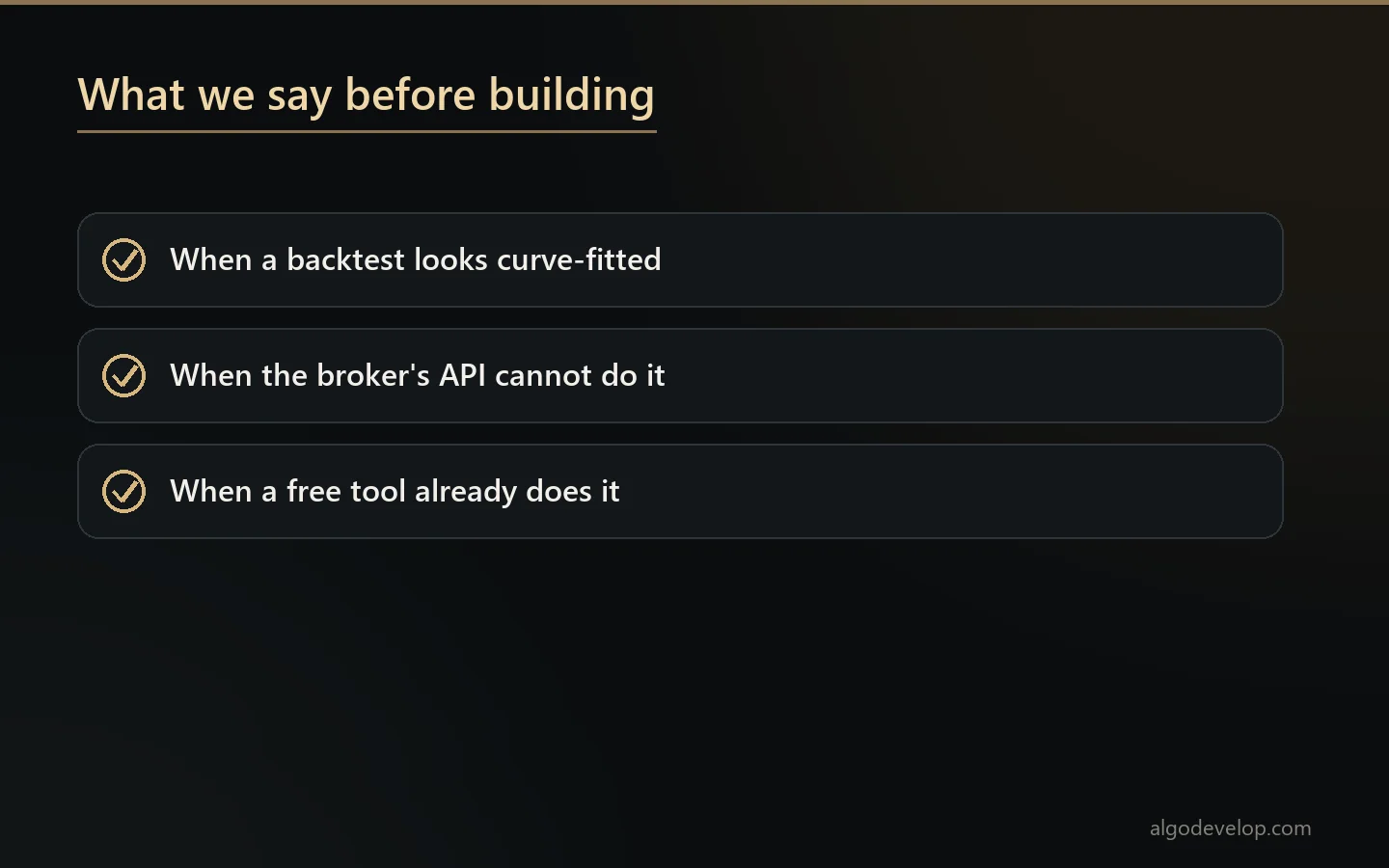
Nothing entered this portfolio without that conversation. When a backtest looks like curve fitting rather than an edge, we say so before building. When a requirement is not possible on a broker’s API, we say so before quoting, not after. And when a free tool from an exchange or platform would do the job, we say that too.
We build software. We do not sell signals, and we are not a SEBI-registered intermediary, adviser or research analyst. Nor do we promise that any strategy will make money, because nobody honest can.
Trading software portfolio – frequently asked questions
Why is this trading software portfolio anonymised?
Because people who pay for trading software rarely want their strategy, broker or size on somebody else’s website. We would rather keep their custom than use their name.
Why are there no performance figures?
We do not publish other people’s results. Besides, a portfolio showing performance is usually showing you a demo account, or the one client that worked.
Can I see something closer to my own project?
Yes, just ask. We keep names out of the portfolio, but we do not hide the work. So tell us what you are trying to build. We will describe the closest thing we have delivered, without naming anyone.
What kinds of work are in the trading software portfolio?
Signal copiers, MT4 and MT5 Expert Advisors and indicators, and Indian broker API automation. It also holds Python crypto bots, binary platform bots, and manual strategies turned into software.
Do your clients own what you build?
Yes. Every project here belongs to the client outright, source and documentation included. There is no expiry and no per-trade cut.
Do you run the software for clients?
No. It runs on their machine or VPS, signed in to their own accounts, with credentials we never see.
How long does a typical project take?
Most projects in this portfolio took between a few days and a couple of weeks, depending on complexity. You also get a timeline with a fixed quote.
Will you tell me if my idea will not work?
Yes, and before quoting rather than after. That includes saying when a backtest looks like curve fitting, or when a free tool you already have would do the job.
Do you provide trading signals?
No. We build software. We are not a SEBI-registered intermediary, adviser or research analyst, and we do not manage anybody’s money.
How do I start?
Describe what you want to happen, with rules, screenshots or just a talk about how you trade. Then we will tell you what it involves.
Ready to start?
Tell us your requirements and get a fixed quote — usually within a few hours.
Disclaimer: AlgoDevelop is a software & automation development studio — not a SEBI-registered intermediary, broker, investment adviser, or research analyst. We do not provide trading signals, tips, or investment advice, do not execute trades as a service, and do not manage funds or accounts. Every tool is custom software that you operate on your own account, with your own credentials and API, under your own control. You alone make your trading decisions and are responsible for your results and for any registrations, approvals, or compliance your usage may require (including SEBI/exchange rules in India). Trading carries substantial risk of loss; past performance and backtests do not guarantee future results. No guarantee of profit.